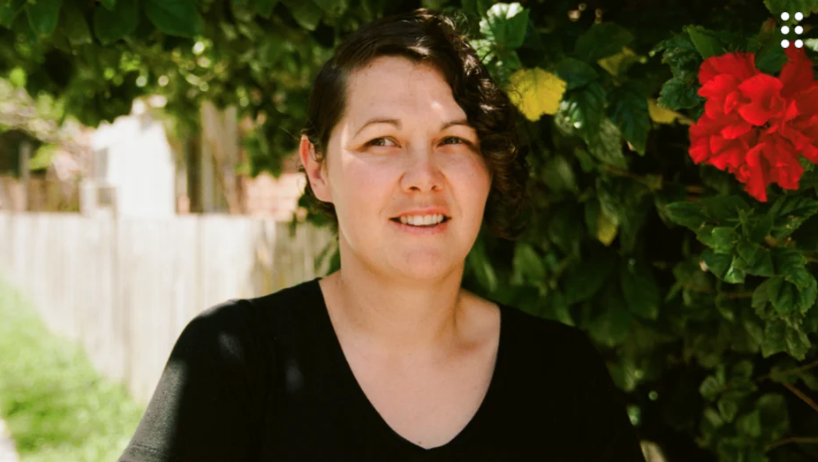
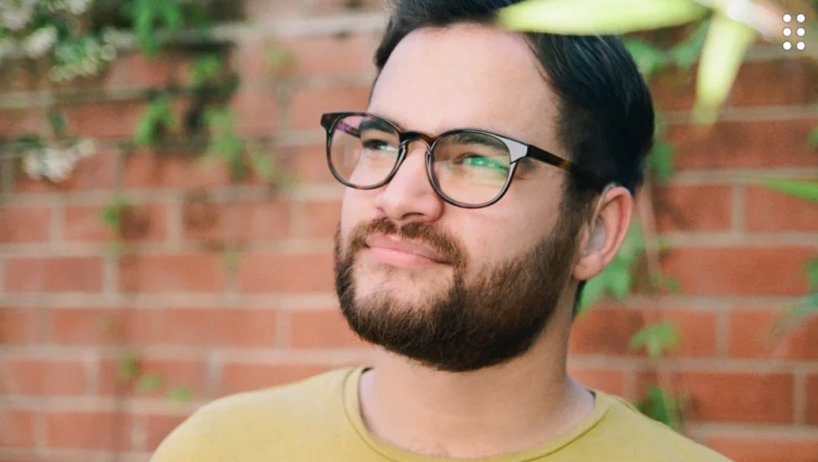
Jordanna and her daughter, Callie, both deaf. “I grew up deaf, no cochlear implants but I have friends who wear them so I knew about it. Her father also wears cochlear implant too. When she was born, really I had a gut feeling when I was pregnant that I knew she’s deaf. But when she was born and had a hearing test to confirm this, it really hit me big time thinking, ‘So its true, she’s deaf…’. I was emotional about it, so I look back and think. I didn't want to go through what I’ve been through, like speech therapy 2 or 3 times a week, visiting specialists that were​ so far away a lot of visits and some barriers too. I thought cochlear implants will her an opportunity for both worlds… Callie: Mummy I want to sit Jordanna: Yes okay but I need to sign Callie: No Jordanna: Sorry I need to sign. You want to watch me signing? Callie: No Jordanna: We’ll be finished soon I want to give her the opportunity, cochlear implants, and Auslan. I want to her to grow up… (interrupted by Callie) Jordanna: Oh alright I didn’t want her to grow up at 18, thinking that she might tell that I'm selfish that I made her too proud of being deaf. So when she’s 18, she can make her own choices, leaving cochlear implants or take it out. it’s up to her.”
Auslan Transcript: “We have 2,200 tribes from all over Australia, all different languages too. I follow my tribe where my family has been doing for years pass it down a generation, named as Moree. The tribe is called Gamilaraay. I don’t normally feel the connection with animals and I love water animals, like dolphins, seahorse etc. However suddenly one day out of nowhere I felt very strongly connected with Emu. When I think of the Emu I feel completely relaxed. I watch Emu’s eyes and at the same time, I feel my heart is beating fast. It’s like Emu and I are sharing our souls, but I couldn’t figure out why I’m feeling this way and that I felt confused. So I’ve contacted the aboriginal tribe from Gamilaraay and I explained my situation. They smiled and said the women have strong spirits with the Emus. I was like, ‘oh but what’s doe means?!’ They said Emus means a leader. That’s mean if I’m connected with the Emus, it means I’m a leader but I've resisted this because I don’t feel like I’m a leader. When I think of the Emus, it's a reminder that I should become a leader. We are born with our character and would know what to do but no, we look at our animal, like we supposed to know how they interact, how they communicate, how they hunt food, how they look after the family. We learn from them and we became one of them like a similar personality. We are meant to be in a connection with our animals. It gives me goosebumps when I learned of this, and I feel like wow, it's just amazing with that connection…"
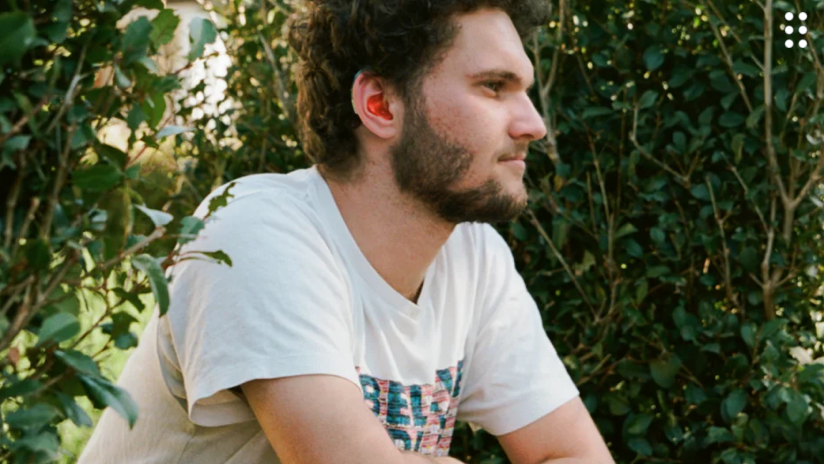
Sam. a new member of the deaf community two years ago. “I first went to deaf camp when I was at school. I thought we would all be the same, lip-reading and speaking to each other but I arrived and everyone was signing. It was a shock to me. This means I am now a minority because I grew up in a hearing world. Now I am forever changed. An amazing experience. It forced me to rethink my life and I decided to learn Auslan. I am slowly getting there starting from A….B….C but I am improving every day. I still feel strong connections to the friends I made from that first Deaf camp…”
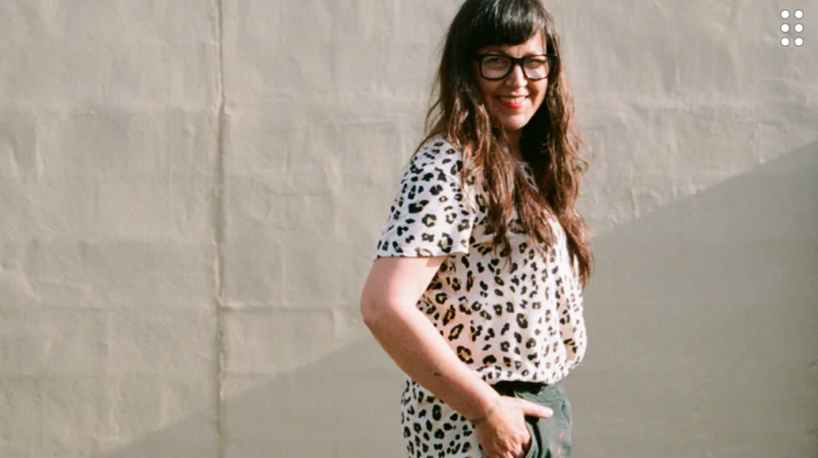
Angie, deaf artist recently learned to sign two years ago. Before that​​,​ she was oralism most of her life. “I did many different roles but painting was always my favourite. I’ve been painting full time, I think about 3 - 4 years…I started with practicing​ in painting and then over the time, I improved my skills. At first,​ I wasn’t sure what to do with my style, I did a lot of experiment and then suddenly​ I found my style and I focused on that. My style is unique because I’m deaf, there are​ so many painters who are hearing but my work is unique, its a deaf way, its emotional and show there’s hands movement, eyes and lips in my paintings. It’s a symbol that connect to deaf people. Deaf people know this. My work also teach hearing people about deaf people, they are like oh I get it now. They understand it more…”​
David, strong member of deaf community, working in Ephpheta Centre for Deaf and Hard of hearing people I always wanted to work in hearing organisation as engineering. I had other deaf organisations asking for me to work for them, but I declined. Over time, I got promoted with good income, raise my family well and good professional. I worked there for 15 years but then the company changed. Their business wasn’t doing well so the company decided to move to China. I thought ‘Me, going to China?!’, but accessible wasn’t great over there. If China has a good accessible, then I would consider. I would bring my family with me but I didn’t. What would my wife do? She would have to leave her job and maybe there was nothing for her to do in China. So I accepted the redundancy, it was really hard because I loved that job there. Hearing people were fantastic, they know that I’m deaf but because I was such a good worker. I work hard, yes much harder to prove myself there. I communicate with hearing staff through notes or on the ​computer. They were so patient​​e with me and wonderful to work with. If I have a question, they never get frustrating with me, they were always happy to answer. I felt very lucky to work in such an amazing organisation then. So when I lost my job, I thought what’s next?. I wanted the same field but that type of work only 1 or 2 fields in Australia so it's quite rare. I need to move to Europe or America for that type of engineering. The deaf community contacted me again so I thought, alright but I had so many directions in that career, like working in Deaf Australia, working in North Rocks aa ​s casual teacher, and working for The Deaf Society. I did so many roles for a short time. Then I arrived to Ephpheta Centre, it’s a small team which suited me well. If there was too many team, I wouldn’t manage as its just who I am. I’ve been working for Ephpheta Centre for 8 years, promoted about 4 times, first as a ​youth worker, community worker officer, community engagement and now community manager. I look back and realised this is a​ ​ good place to work because of communication. It’s much easier here, with deaf staff and everyone’s sign. If compare to hearing organisation, the communication wasn’t great there (just gestures) but a ​fantastic​ working place. Working here is good but communication is excellent. In a perfect world, I would rather have both jobs, like 2 days in Ephpheta Centre Centre and 3 days in engineering organisation…”​​​
Gareth, deaf gay, vice president of the Deaf Rainbow, discovered his deaf identity at age 12 and gay identity at age 20. “I bumped a man, actually hard of hearing or hearing because he was wearing cochlear implants. We met at the gay bar, and I went up to him and asked him ‘do you sign?’, he said ‘oh no I’m oral’, like hesitating, then said ‘I’m deaf but I don’t sign’ So we communicate via mobile and over the time he realised we are connected because we have similar experience struggling as a deaf and that we understand each other. We hang out more often and over time we became best friends. He realised that now he rather being deaf world, not hearing world. I thought where are other deaf people, similar to him? That’s my aim for running Deaf Rainbow, to connect and support other people. By doing this we will be doing fundraising and organising more events so that more people have a chance of meeting other people with better support…”
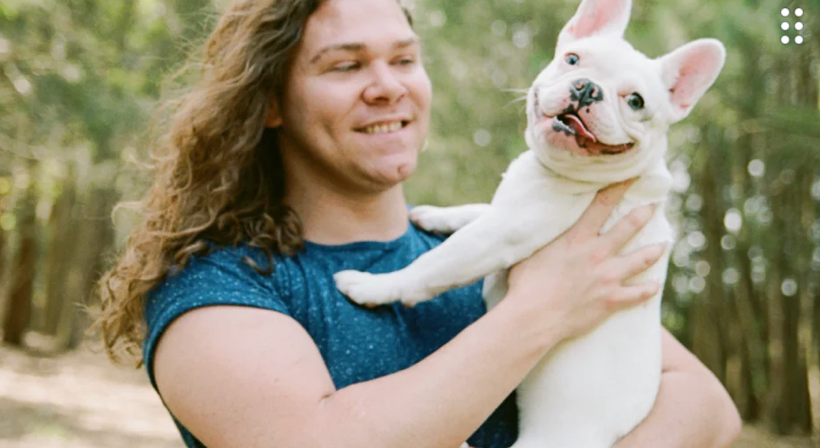
Bryan, a proud member of deaf community and a proud owner of deaf french bulldog named Elsa. “Originally at first, I always wanted a white dog, French, blue eyes and pointy ears. That’s what I am I look for, doesn’t matter if deaf or not. After a while, Gareth discovered it and said to me oh look, a cute white french, and that is what I wanted. I contacted the breeder and after discussing, they informed me the dog is deaf. That’s even better because I always wanted a deaf dog! So overall I thanks Gareth for finding it the right one and the dog is beautiful. Lucky it was the next suburb... The breeder told him that many people were interested in having Elsa but I insisted that Elsa should be with me. It is the deaf connection. I know what it’s like to be deaf and we are similar. I can communicate in sign language which will be much better than living with hearing people who do not know how to sign.”
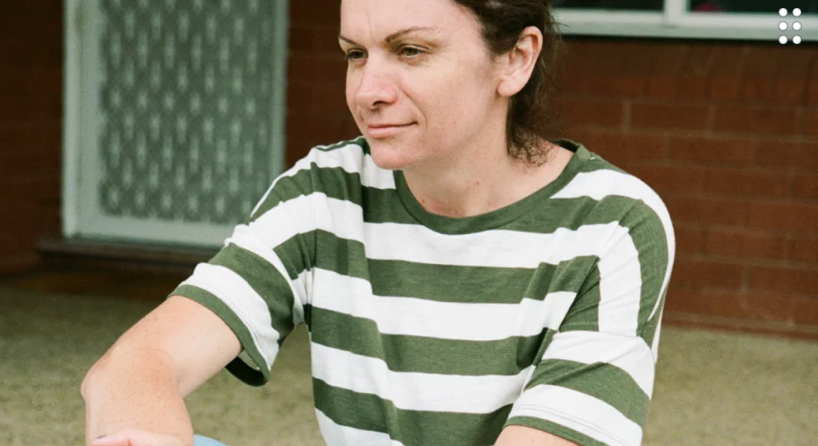
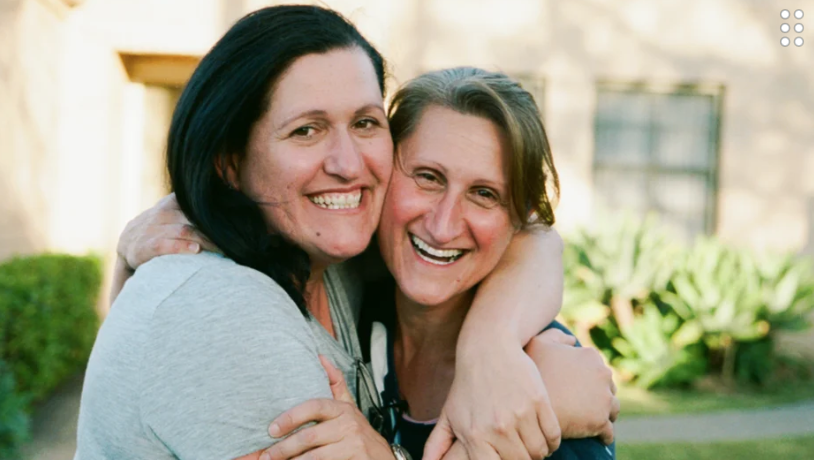
Teresa and Roselina, deaf siblings from the non-English speaking background. Auslan Transcript: Rosalina - Our mother was depressed at that time there no counseling in the 1970s. With no counseling, there was no understanding what’s deafness means. So when my mother became depressed, she tried to be positive and taught us her best to teach us to speak. She was like our speech therapy saying ‘Um, ah, ah, hum’. She has been doing for years, kept going. I think it was successful that now we talk with our voice. But I still like to sign as I love watching with hands. It makes me feel like, ‘wow’ watching the hand movements (visual language). It works for me…” Teresa - “ Oh I speak oral. I normally follow our deaf friends who sign and I sign with them. We usually pick up their signs. However, I'm not good at signing but I do my best to follow other people's signs. It’s good fun though. I rather use both language, voice and sign. I feel comfortable with it…”

Deaf Outskirts

2018

9 inkjet photo paper, 32 x 32 inch

9 single-channel videos, 4K UHD video, colour, no sound

Artist Statement:

Sue Jo's documentation project aimed to highlight the diverse identities and experiences of deaf individuals, showcasing their ordinary nature and emotional depth. Each person she interviewed expressed a unique aspect of their personality, representing the richness of their individuality within the larger deaf community.

Work in progress:

In 2028, the future project plans to reconnect with the individuals previously interviewed by Sue Jo to explore how their identities and experiences have evolved. Through follow-up interviews, the project examines whether their sense of self or life experiences has undergone notable changes.

This project aims to present a comprehensive understanding of the long-term development and transformation of these individuals within the context of their deaf identities.

Exhibitions:

2018 “Rock Paper Scissors” St George College of Fine Arts and Ceramic Design, Ultimo
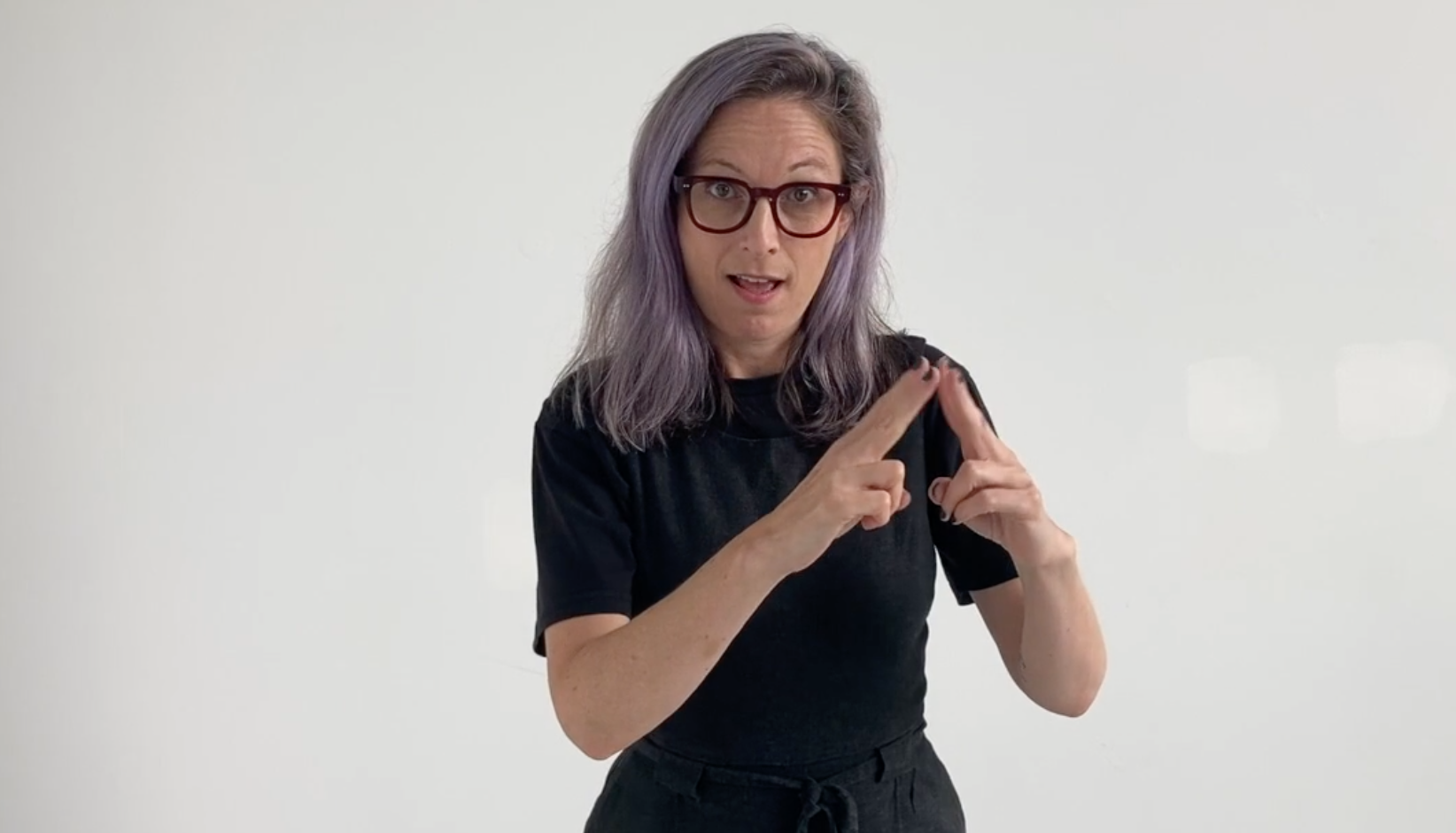
Auslan and captions